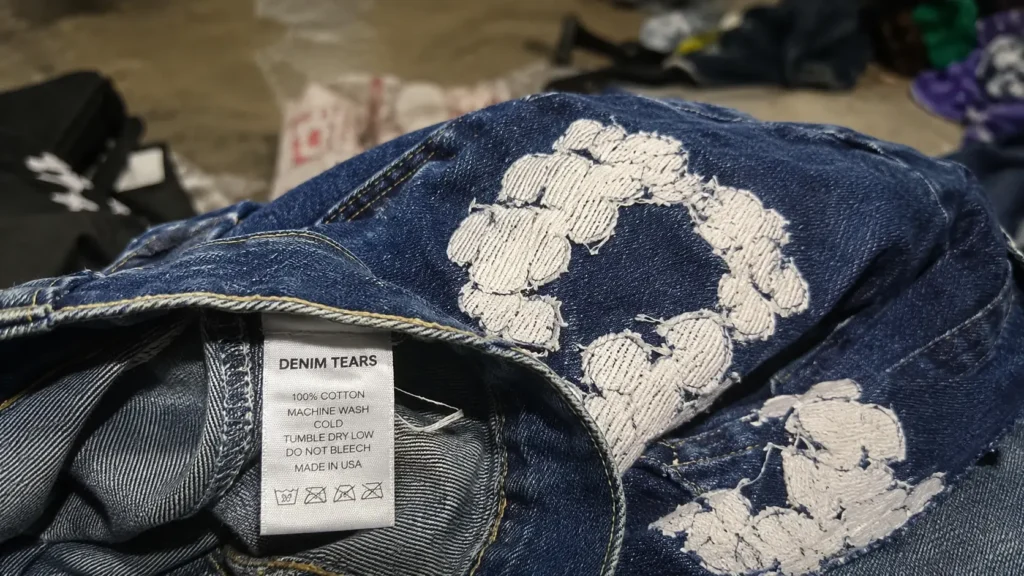
Tremaine Emory launched Denim Tears in 2019, but it took less than two years for the brand’s cotton wreath motif to become one of streetwear’s most recognized symbols. The design isn’t decorative — it references the cotton plant as a marker of African American history, and that weight is part of why pieces sell out within minutes of release.
Collaborations with Levi’s in 2021 and later with Stüssy pushed the brand from cult-favorite to a name regularly mentioned alongside major fashion houses. That speed of growth created a problem most emerging labels eventually face: counterfeiters moved in almost as quickly as the hype did, and now replica cotton wreath jeans and hoodies are nearly as easy to find online as the originals.
The Allure and The Deception: Why Fakes Stick Around
Denim Tears drops are intentionally small — that’s the core reason fakes exist in the first place. A release sells out within minutes, then resurfaces on the resale market at two to three times its original price. A pair of jeans that retailed for $300 can climb past $800 within a week, sometimes touching $1,000 depending on the colorway. For someone who connects with the design and the history behind it but isn’t willing to pay resale prices, a $50 replica starts to look like a reasonable compromise, even if it isn’t one.
What’s changed isn’t the demand — it’s where the fakes show up. They’re no longer confined to sketchy corners of the internet; replica cotton wreath pieces now appear on mainstream e-commerce platforms, in social media shops, and occasionally on the racks of discount retailers.
Counterfeiters have simply gotten better at reading the brand’s scarcity and turning it into a sales pitch. The tradeoff buyers don’t always see upfront is that this convenience comes at someone else’s expense — the designers, the production teams, and the broader industry that depends on intellectual property actually being respected. Most of these purchases end the same way: a product that doesn’t hold up, and a buyer who quietly knows they got less than they paid for.

Spotting the Imposters: Your Essential Buyer’s Guide
Telling a fake from the real thing comes down to knowing exactly what to check, not just trusting first impressions. Some of the better counterfeits have gotten close enough that a quick glance won’t catch them — the giveaways are consistent once you know where to look, but they’re in the details most buyers skip past: the fabric, the stitching, the small elements that are expensive to replicate accurately.
The Tell-Tale Stitches and Fabric Faux Pas
Fabric quality is usually the first place authenticity shows up. The Levi’s collaborations in particular use heavyweight, often raw denim that has real structure to it — a noticeable weight and texture that’s hard to fake with cheaper materials. Counterfeit denim tends to run thinner and shinier, sometimes carrying a faint chemical smell left over from low-grade dyes and rushed manufacturing. The most reliable indicator, though, is the embroidery on the cotton wreath itself. Authentic pieces are stitched densely and evenly, giving the design a slightly raised, almost three-dimensional finish.
Replicas usually fall short here — loose threads, uneven stitch lines, embroidery that doesn’t fully cover the intended space, or a wreath positioned slightly off from where it should sit. The stitching on fakes often looks thin enough that it could come apart within a few wears, which is exactly what tends to happen.
Labels, Tags, and Hardware: The Devil’s in the Details
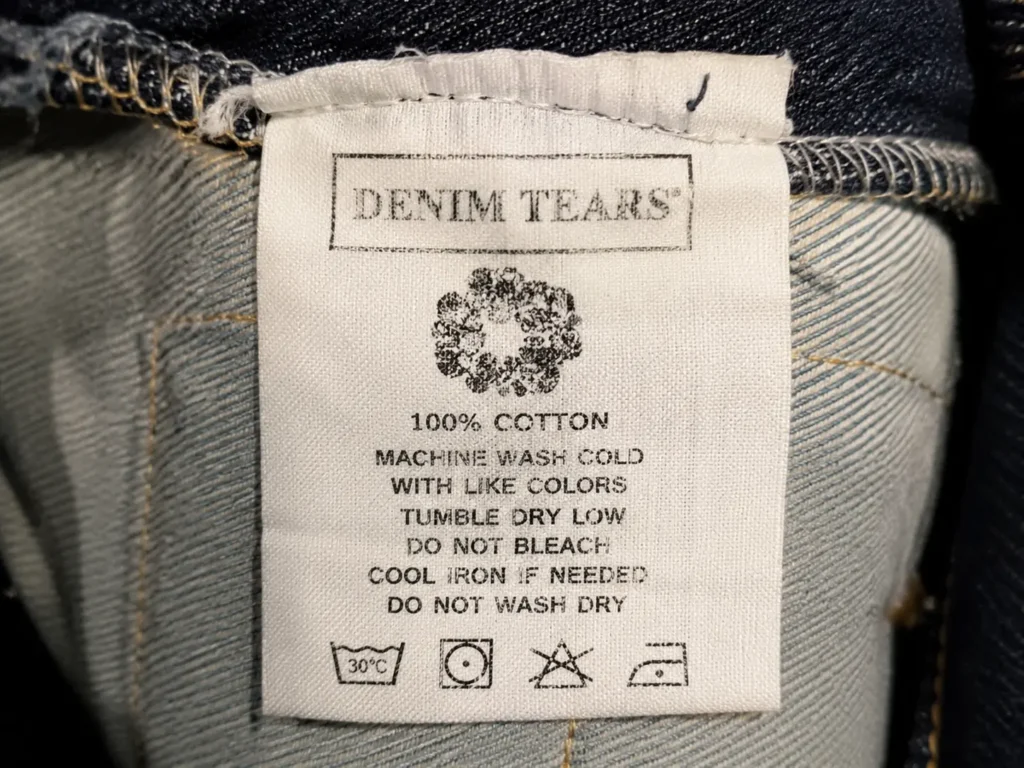
Branding elements are where counterfeiters consistently struggle, since these details are expensive and time-consuming to replicate accurately at scale. Interior care labels are a good starting point — authentic ones are crisply printed, securely sewn in, and consistent in font, with accurate care information. Counterfeit labels tend to show blurry printing, mismatched fonts, occasional spelling errors, or attachment that’s slightly crooked or loose. Hang tags follow the same pattern: genuine tags have a premium feel, sharp graphics, and often carry product codes or collaboration details that can be cross-referenced against the official release.
Replica tags are usually flimsier, with duller printing and generic information that doesn’t quite line up with what it should say. Hardware tells the same story at an even smaller scale — authentic zippers and buttons feel solid, are often engraved, and operate smoothly, while counterfeit hardware tends to be lighter, prone to sticking, and noticeably cheaper to the touch. None of these details are individually conclusive, but together they’re usually enough to settle the question. These same red flags — mismatched fonts, loose stitching, cheap hardware — show up just as often in counterfeit luxury streetwear like the Louis Vuitton hoodie, so the checklist works across brands, not just Denim Tears.
The Hidden Costs: More Than Just a Bad Deal
Buying a fake Denim Tears piece isn’t just a quality gamble — it’s an indirect investment in a global supply chain that operates with very little accountability. Counterfeit production frequently relies on exploited labor, unsafe working conditions, and tax evasion, and in some cases extends to child labor and poverty wages for the people actually making the goods. That stands in direct contrast to brands like Denim Tears, which build their production around accountability rather than around it.
There’s also a more immediate cost that has nothing to do with ethics. The satisfaction of getting a “deal” tends to fade fast — usually around the time the item shrinks after its first wash, the embroidery starts coming apart, or the fabric pills within a few wears. At that point, the money spent has gone toward something that won’t last, often ending up discarded well before an authentic, properly constructed garment would. The environmental cost compounds this: unregulated factories typically rely on harsher chemicals and looser waste controls, adding pollution on top of everything else.
The International Trademark Association puts the global trade in counterfeit and pirated goods in the hundreds of billions of dollars annually — a figure that reflects just how large this problem has grown. Choosing authentic brands that build around responsible manufacturing, Denim Tears among them, is one of the more direct ways buyers can push back against that.

FAQs
Why does genuine Denim Tears apparel come with such a high price tag?
Authentic pieces are priced higher for a combination of reasons: limited production runs, premium materials like raw or specialty denim, detailed craftsmanship, and the cultural significance attached to the brand. The price also reflects the creative work and the stories built into each release.
Is it illegal to buy fake Denim Tears?
Selling counterfeit goods is illegal in most places, but buying for personal use typically isn’t prosecuted. The main practical risk is at customs — imported counterfeits can be seized without any refund. Beyond legal exposure, the bigger issue is the ethical cost of supporting an industry built on exploitation.
How can I verify that an online seller is legitimate?
Check seller reviews and ratings on platforms like Grailed or eBay, and look for actual photos of the item rather than stock images. Sellers willing to provide proof of purchase or order confirmation are generally more trustworthy. A price that seems unusually low relative to resale value is usually a sign something’s off.
What’s the best way to care for authentic Denim Tears jeans?
Raw denim holds up best with minimal washing — this preserves the indigo and lets natural fades develop over time. When washing is necessary, turn the jeans inside out, use cold water on a gentle cycle with mild detergent, or hand wash them. Air drying prevents shrinkage and keeps the fabric in better condition than a machine dryer would.
Does Denim Tears offer an official authentication service?
There’s no standalone service for verifying individual items. The brand relies on authorized retailers and its own official release channels instead. The safest approach is buying directly from the brand’s website, authorized stockists, or resale platforms that guarantee authenticity.
Upholding Authenticity and Intentional Style
The rise of fake Denim Tears isn’t just an annoying problem; it’s a symptom of a much larger challenge facing the entire fashion industry. It really highlights that constant tension between desirability and accessibility, between creative integrity and mass replication. Choosing to buy authentic isn’t just about getting a better quality product, though you certainly will. It’s a conscious decision to support the artists, the visionaries, and the craftspeople who pour their heart and soul into creating meaningful fashion. It’s about respecting intellectual property and the rich cultural narratives that brands like Denim Tears genuinely represent.
So, the next time you’re eyeing that iconic cotton wreath, take a moment to consider the bigger picture. Are you getting the real deal, with all the history, quality, and ethical production that truly comes with it? Or are you settling for a cheap imitation that, in the long run, actually undermines the very culture it tries so hard to copy? Invest wisely. Take the time to educate yourself on the details. And prioritize authenticity. Your wardrobe, your conscience, and the future of creative fashion will absolutely thank you for it. Make choices that resonate with genuine value, not just fleeting trends.